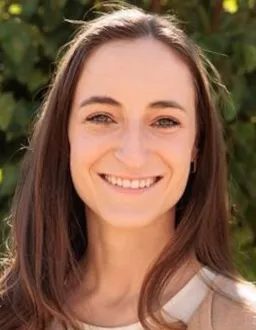
Rachel Bethune, MD, is completing her pediatrics residency training at the University of Manitoba, where she has gained experience caring for children with medical complexity in remote and underserved northern Canadian communities. She is past president of the Professional Association of Residents and Interns of Manitoba. Her scholarly interests include the intersection between complex care and the PICU, and improving outcomes for children with chronic critical illness.
Popular Search Terms
Complex Care Fellowship
Goals of the training program
The goal of the two-year Complex Care Fellowship is to provide learners with valuable clinical training and experience for a career in caring for children with medical complexity. The fellowship equips learners with the skills to be effective clinicians, scholars, and leaders in complex care. The curriculum can be individualized to accommodate a fellow’s learning needs and career goals while providing standard complex care training. All fellows will engage in clinical care and completion of a scholarly project, with opportunities for teaching and advocacy.
The Complex Care Fellowship provides training in the care of children with medical complexity over a period of two years.
Deadline for applications was Oct. 24, 2025.
Clinical training
The first year of fellowship is primary clinical. Fellows have the opportunity to participate in complex care activities enabled by the Division of General Pediatrics at Boston Children’s Hospital and in community sites.
Opportunities for deep clinical exposure will occur in the following areas:
- Primary care medical home
- Consultative care coordination
- Multidisciplinary clinic care
- Perioperative care
- Inpatient care
- Palliative care
- Urgent care
- Home care
- Telehealth
- Post-acute facility care
- Skilled nursing facility care
Complex Care fellows will also provide longitudinal care throughout the fellowship to their own cohort of children with medical complexity. Fellows will be the primary manager of the children’s health, working to fulfill all of the children’s healthcare needs, including chronic medications, durable medical equipment, acute illness treatment, specialty co-management of coexisting conditions, etc. Fellows are expected to fully integrate with nurses, social workers, case managers, therapists, schedulers, and other healthcare professionals in these efforts. Fellows also participate in various multidisciplinary clinical programs, with the potential for other clinical experiences based on individual interests.
- Rainbow Program: Primary care medical home for children and youth with special healthcare needs.
- Complex Care Service (CCS): Consultative health home for children with an existing community-based primary care provider. CCS offers outpatient clinic visits, dedicated inpatient hospitalist service, and home visits.
- Cerebral Palsy and Spasticity Center: Care of children and youth with cerebral palsy and abnormal muscle tone, through collaboration with Orthopedics, Physiatry, Neurology, Neurosurgery, Augmentative Communication, physical and occupational therapy, social work, and CCS.
- Spina Bifida and Congenital Spinal Anomalies Center: Care of children and youth with spina bifida, through collaboration with Neurosurgery, Urology, Nephrology, Gastroenterology, Plastic Surgery, Orthopedics, Physiatry, Endocrinology, physical therapy, social work, and CCS.
- Aerodigestive Center: Care of children and youth who have dysphagia, feeding problems, respiratory symptoms, and related gastrointestinal issues, through collaboration with Gastroenterology, Pulmonology, Feeding Team, Nutrition, social work, and CCS.
- Craniofacial Program: Care of children and youth with a craniofacial condition, through collaboration with Plastic Surgery, Oral Surgery, Neurosurgery, Dentistry, Genetics, social work, and CCS.
Research program
During the second year of fellowship, fellows’ clinical responsibilities will decrease, and they will actively work on a scholarly project with an assigned complex care mentor. Fellows will acquire research skills in design, methods, and analysis through monthly seminars and journal clubs. Fellows will conduct a scholarly project during the course of their fellowship. The project may be clinical, educational, or advocacy-related. They will have access to local, regional, and national data on children with medical complexity. Fellows will be mentored by accomplished faculty with expertise in healthcare administration, finance, medical education, medical informatics, quality improvement, systems engineering, and health services research. They will present their scholarly work at biannual Works in Progress sessions with faculty advisors.
Fellows will be asked to complete research and career development courses through the Clinical Research Center and the Offices of Fellowship Training and Graduate Medical Education.
Medical education training
Medical education is an important focus of the clinical training program. The fellowship curriculum is based on a framework of entrustable professional activities (EPAs) that define essential clinical activities in the care of a child with medical complexity. Curricular components developed by a national team of complex care clinicians, educators, and family leaders are used to structure training and assessment. Activities include the following:
- Evaluate and manage common clinical issues in children with medical complexity (including pain/irritability, aspiration, feeding difficulties, and abnormal muscle tone)
- Provide routine care and troubleshoot common issues for children with medical complexity who use medical technology
- Provide comprehensive perioperative assessment and management for children with medical complexity
- Develop and implement safety and emergency plans for children with medical complexity
- Perform effective, team-based, patient-, and family-centered care coordination
- Advocate for children with medical complexity and their families
Fellows receive formal training through clinic seminars and hospital-wide curricula, and have opportunities to engage in career development sessions, dedicated clinical teaching, and journal clubs in complex care. Fellows will also teach residents about caring for children with medical complexity. Fellows have the opportunity to participate in educational projects at Harvard Medical School and in the Boston Combined Residency Program, the pediatric residency program based at Boston Children’s Hospital and Boston Medical Center.
2025 fellows
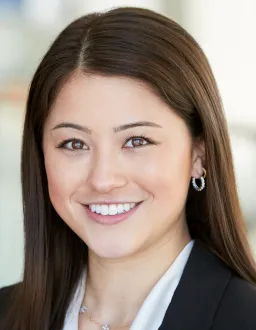
Caroline Leahy, MD, has a longstanding commitment to caring for medically complex children, shaped by her undergraduate historical research on trisomy 21 and clinical research on autism and executive function in young children. She completed her pediatrics residency at The Children’s Hospital of Philadelphia (CHOP) and is now an inpatient Pediatric Hospitalist, refining her skills in managing medically complex inpatients. Through the Complex Care Fellowship at Boston Children’s, she aims to expand her expertise to both inpatient and outpatient settings, deepen her understanding of integrated care models, and pursue research focused on improving the experience of medically complex patients and their families as they navigate the healthcare system.
Past fellows
- Anjum Ahmed, MD, graduated from the Complex Care Fellowship in 2025. She is currently an attending physician at Children’s Hospital Los Angeles.
- Florence Gagné, MD, graduated from the Complex Care Fellowship in 2025. She is currently at Montreal Children’s Hospital as a pediatrician primarily in the complex care service.
- Alexander Strzalkowski, MD, graduated from the Complex Care Fellowship in June 2023. He is currently at Children's Specialized Hospital as a pediatrician in the Special Needs Primary Care clinic.
For further information and to apply:
Fellowship director:
Kathleen Huth, MD, MMSc, FRCPC
Kathleen.Huth@childrens.harvard.edu
Fellowship coordinator:
Anna Schlemmer
Anna.Schlemmer@childrens.harvard.edu