
Contact Us
Department of Neurology
7:00 am - 8:00 pm
9:30 am - 6:00 pm


Seizures happen when brain cells fire or “talk” too much, temporarily disrupting the brain’s normal electrical signals. They’re quite common, especially in infants and young children, and they have a wide range of causes. Sometimes, seizures are triggered by a disease or injury, but for most children, there is no detectable cause. Sometimes other conditions, such as fainting or stroke, can look like seizures.
Many people think of seizures as involving convulsions in a child’s whole body or a temporary loss of consciousness, but with some types of seizures, people may not notice anything out of the ordinary. Certain seizures are easy to recognize (jerking, twitching, stiffness), while others don’t have any outward signs. Researchers believe that about 5 percent of people in the United States experience at least one seizure in their lives.
Since children’s brains are growing and developing, seizure activity changes as they grow up. A child may be diagnosed with epilepsy if they have had two or more unprovoked seizures, or after a single seizure if the child shows evidence of high susceptibility to further seizures.

When medication failed to treat her seizures, Kristen decided to undergo surgery for epilepsy.
Focal seizures, formerly called partial seizures, happen when abnormal electrical activity has its onset in a particular area of the brain, known as the “seizure focus.” They can occur in any lobe of the brain. Before a focal seizure, your child may experience an aura — a strange feeling that involves changes in hearing, vision, or sense of smell.
Focal seizures may last less than a minute and have different symptoms depending on which area of the brain is involved. They usually affect the muscles, causing a variety of abnormal movements that are limited to one muscle group, such as the fingers or the larger muscles in the arms and legs. If the abnormal activity is in the brain’s occipital lobe, your child may experience changes in vision. Your child may experience sweating or nausea or become pale but will not lose consciousness.
Focal seizures may be associated with altered consciousness. Your child can experience a variety of behaviors, such as gagging, lip smacking, running, screaming, crying, or laughing. After the seizure, during what’s called the postictal period, your child may feel tired.
Generalized seizures involve both sides of the brain. Children lose consciousness and have a postictal period (a recovery phase) after the seizure. The types of generalized seizures include:
Myoclonic seizures involve sudden jerking in a group of muscles. These seizures tend to occur in clusters, happening several times a day or for several days in a row.
Infantile spasms are a rare type of seizure disorder that occurs in the first year of life. They usually involve brief periods of movement in the neck, trunk, or legs, often when a child is waking up or trying to go to sleep. They usually last only a few seconds, but infants may have hundreds of these seizures a day. This can be a serious problem and can be associated with long-term complications. Spasms may also occur throughout life and can also cause drop attacks.
Status epilepticus is a situation in which seizures develop into a prolonged seizure of five minutes or longer duration. This condition is a medical emergency and may require hospitalization.
Febrile seizures are triggered by fever and usually happen in children between 6 months and 5 years of age. They involve muscle contractions — either mild (such as stiffening of the limbs) or severe (convulsions). Febrile seizures are fairly common, affect about 2 to 5 percent of children in the U.S., and often run in families. Febrile seizures that last less than 15 minutes are called “simple”; those lasting longer are called “complex.”
A child may have a wide variety of symptoms depending on their type of seizures. Some seizures are easy to recognize through signs like shaking or temporarily losing consciousness. Other seizures are so mild that you might not even recognize them as seizures: They might involve only a visual hallucination, for example, or a moment of very strong emotions. In some cases, seizures have no outward signs at all.
Some signs that your child may be experiencing seizures include:
Sometimes these symptoms can have a cause other than seizures. Further testing will help doctors confirm suspected seizures or find another condition that is causing the symptoms.
Seizures don’t necessarily harm the brain, but some seizures do cause damage. The side effects of seizures, such as dramatic changes in behavior and personality, may remain even when your child isn’t actually having a seizure. In some cases, seizures are associated with long-term neurological conditions and problems with learning and behavior.
During the seizure itself, children may fall or get injured. It’s important to stay with your child during a seizure. Gently ease the child to the floor if sitting or standing, turn them on their side in case of vomiting and remove any surrounding hard objects. Seizures may leave your child exhausted. Unfortunately, just as troubling as the physical complications, seizures can also cause embarrassment and social isolation.
Seizures can take a wide variety of forms, depending in part on what part of the brain has the abnormal electrical activity. Many different diseases and injuries can cause children to have seizures. These include:
Often, however, the exact cause of seizures cannot be determined.
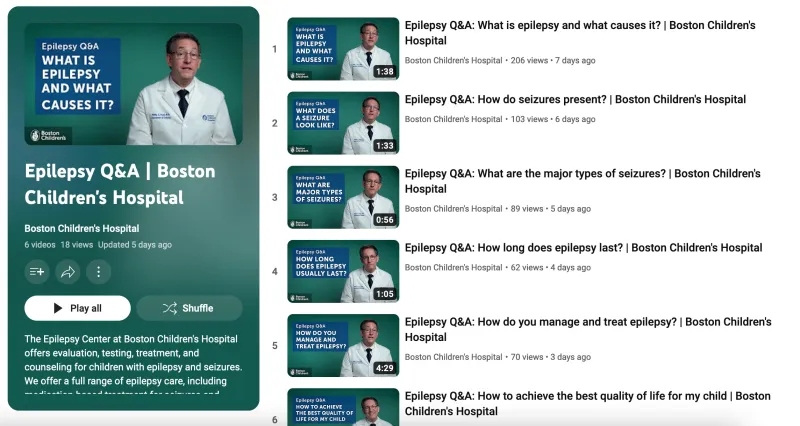
Members of the Epilepsy Center at Boston Children's Hospital answer frequently asked questions relative to epilepsy and seizures.
If your child is having seizures, a proper diagnosis relies strongly on your observations of your child’s symptoms. When you meet with a neurologist, you’ll want to be prepared to describe the following:
Your medical team will first try to distinguish between true seizures and other problems that can look like seizures, such as stroke, fainting, and movement disorders. If your child is indeed having seizures, the next step is to determine where in the brain the seizures are coming from and whether the seizures represent epilepsy or some other disorder. Your child’s physician will use a variety of tests to evaluate seizures, including:
Many of these tests can be performed in an outpatient clinic. You may also be offered testing for problems that may accompany seizures, such as learning or behavior difficulties or depression. This may include specialized testing to monitor your child’s cognitive abilities, learning, behavior, emotional well-being and social function.
If your child is experiencing seizures that are triggered by another disease or injury, specialists experienced in treating that condition will work closely with epilepsy and seizure specialists to provide the best possible care for your child.
An important part of caring for your child is treating not only the seizures themselves, but any complications they may cause. For example, neuropsychologists use specialized testing to monitor your child's cognitive abilities, learning, behavior, emotional well-being, and social function, in order to develop strategies that will help your child function at their highest possible level.
Treatments for seizures have expanded greatly in recent years and include a variety of medications, specialized diets, or, in serious cases, a variety of brain surgeries. At Boston Children's Hospital, we care for children who have epilepsy or who have experienced seizures through the Epilepsy Center, Fetal-Neonatal Neurology Program, and many other programs that are dedicated to caring for children with disorders that may cause seizures.
Physicians and researchers at Boston Children’s Hospital are constantly looking for safer, more effective treatments to help children live seizure-free. We typically have several clinical trials going on at any time. Our doctors are: