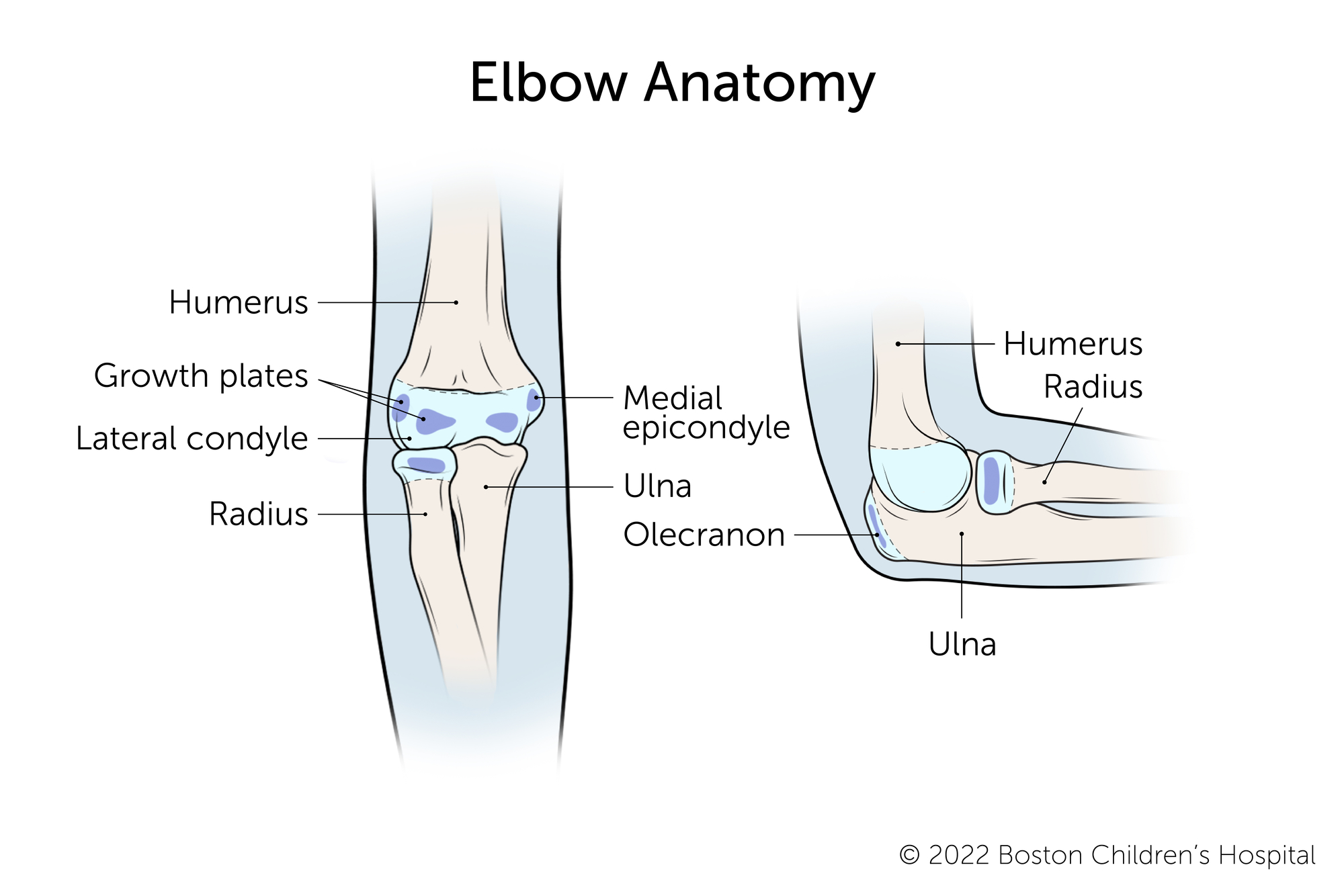
The elbow joint is formed by the humerus bone in the upper arm, which articulates with the ulna and radius bones in the forearm. Growing children have growth plates, areas of cartilage, at each end of these bones that contribute to their growth. Eventually, growth plates “close” or harden into bone, but before then, they are easily injured. Muscles, ligaments, and tendons around the arm bones stabilize the elbow and support the movements of the arm.
During an overhead throw, the arm moves through several extreme positions at high speed, putting the elbow under a great deal of stress.
When players — especially those between 9 and 14 years old — throw too much without rest, the elbow can become inflamed and sore. Without sufficient rest, the ligaments and tendons may tear away from the bone, or parts of the bone can separate from each other.
Conditions related to Little League elbow include:
- Medial epicondylar apophysitis: Stress injury of the growth plate on the inside of the elbow
- Medial epicondyle fracture: Fracture of the round portion at the end of the humerus
- Ulnar collateral ligament (UCL) injury: Sprain or tear of the ligament on the inside of the elbow