“Little League elbow" is a term used to describe pain in a young throwing athlete’s elbow, which may be due to injuries to the muscles, tendons, ligaments, and/or bones.
Most of the time, Little League elbow is an overuse injury with many of the same risk factors as Little League shoulder.
Playing the same sport on multiple teams (for instance, a school team and a club team in the same season) increases athletes’ risk, as does early sports specialization. Poor technique can aggravate an existing injury. Less often, the injury can occur from a single, traumatic event.
No young athlete should try to play through elbow pain, especially if they play on multiple teams. Prompt diagnosis and treatment can prevent a mild injury from becoming serious and potentially requiring surgery.
Of all baseball players, pitchers are at the highest risk of Little League elbow. However, other position players who throw a lot — particularly catchers — are also at risk.
Age also plays a factor. Growing children between 8 and 14 are at particular risk of Little League elbow, though it can affect athletes as old as 17.
Little League elbow symptoms may include:
Any persistent elbow pain in a young throwing athlete should be evaluated by an orthopedic surgeon or sports medicine specialist.
To understand Little League elbow, it’s helpful to know a little bit about the anatomy of the elbow joint.
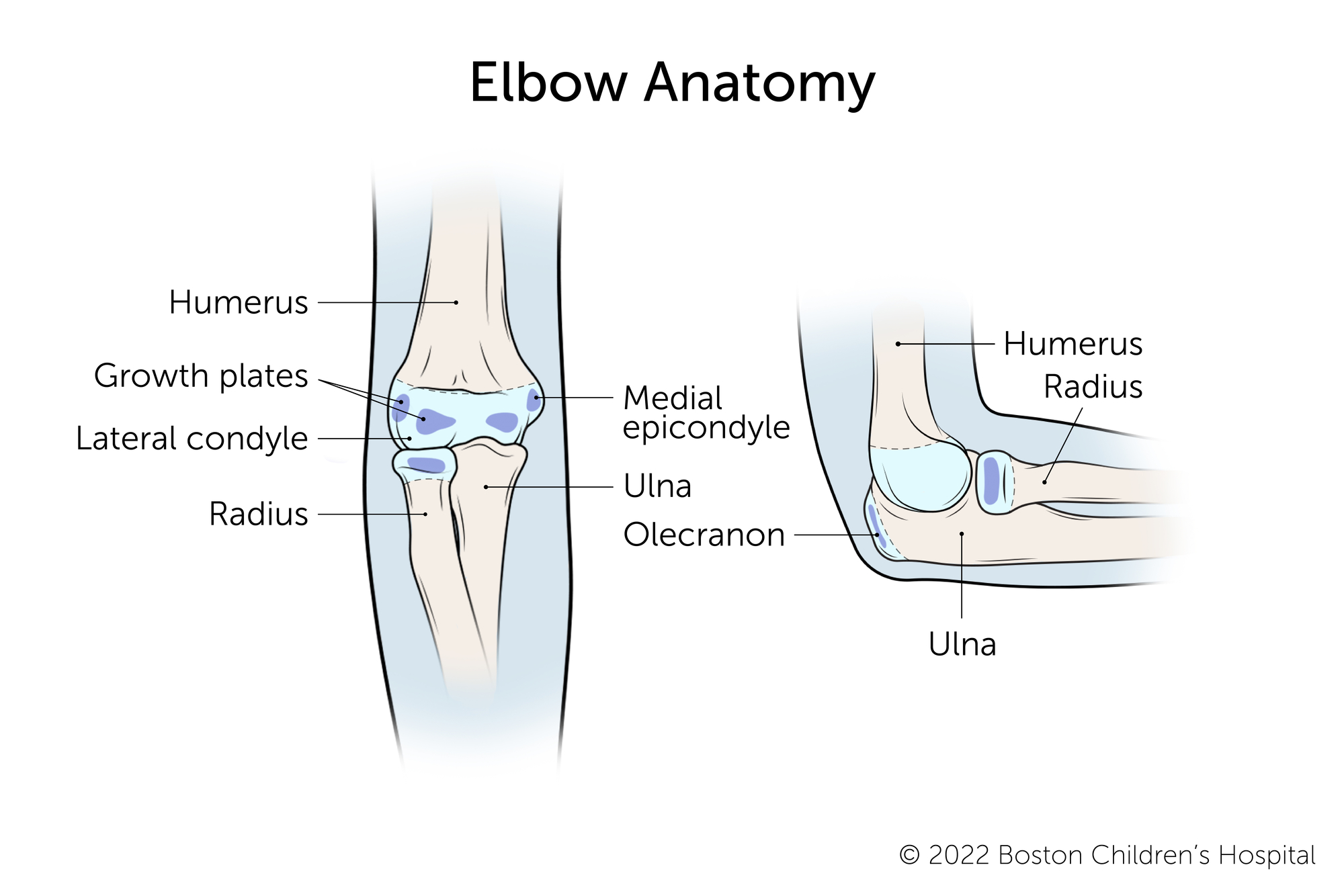
The elbow joint is formed by the humerus bone in the upper arm, which articulates with the ulna and radius bones in the forearm. Growing children have growth plates, areas of cartilage, at each end of these bones that contribute to their growth. Eventually, growth plates “close” or harden into bone, but before then, they are easily injured. Muscles, ligaments, and tendons around the arm bones stabilize the elbow and support the movements of the arm.
During an overhead throw, the arm moves through several extreme positions at high speed, putting the elbow under a great deal of stress.
When players — especially those between 9 and 14 years old — throw too much without rest, the elbow can become inflamed and sore. Without sufficient rest, the ligaments and tendons may tear away from the bone, or parts of the bone can separate from each other.
Conditions related to Little League elbow include:
Coaches, parents, and athletes can play an active role in preventing Little League elbow.
To reduce the risk of Little League elbow in young athletes, USA Baseball issued guidelines for youth and adolescent pitchers by age group. These guidelines should be applied during practices and games and across multiple leagues.In all age groups, players should not pitch in more than one game on the same day.
| Ages 0-8 | Ages 9-12 | Ages 13-14 | Ages 15-18 | Ages 19-22 | |
|---|---|---|---|---|---|
| Typical pitching distance (in feet) | 46 | 46-50 | 60 | 60 | 60 |
| Maximum combined innings in a 12-month period | 60 | 80 | 100 | 100 | varies from player to player; be sure to monitor the number of pitches and the elbow for signs of injury |
| Minimum time off from throwing every year (in months) | 4 | 4 | 4 | 4 | 3 |
| Daily max pitches in a game | 50 | ages 9-10: 75 ages 11-12: 85 |
95 | ages 15-16: 95 ages 17-18: 105 |
120 |
Your child’s doctor will ask about your child’s sports history:
The doctor will examine your child’s elbow to see how well it moves around, where the pain is, and whether there is swelling.
An X-ray will show any changes that might have occurred where the cartilage meets the bone or damage to the growth plate.
Most athletes with Little League elbow can be treated with rest and physical therapy. Children with more severe injuries may need surgery.
Your child may need surgery if their injury was the result of a single, painful accident, the injury is severe, or if they have a broken elbow.
Recovery from surgery usually takes two to three months. During this time, your child will return for follow-up appointments and physical therapy to ensure their elbow heals well and to maintain strength and range of motion in the elbow.
Your child’s doctor will let you know when it’s safe for your child to start throwing again. Their return to throwing should be a very careful, gradual process to protect their elbow from re-injury.
The skilled experts in our Hand and Orthopedic Upper Extremity Program and Sports Medicine Division have treated thousands of children with Little League elbow and many other arm conditions. While assessing Little League elbow, our multi-disciplinary team looks for signs that change with age and maturity level to make the most precise diagnosis possible and provide expert care to so that young athletes can return to playing the sports they love.
To prevent Little League elbow and other throwing injuries, The Micheli Center for Injury Prevention (part of the Sports Medicine Division) offers throwing analysis services to help identify injury risks in an athlete’s throwing mechanics.