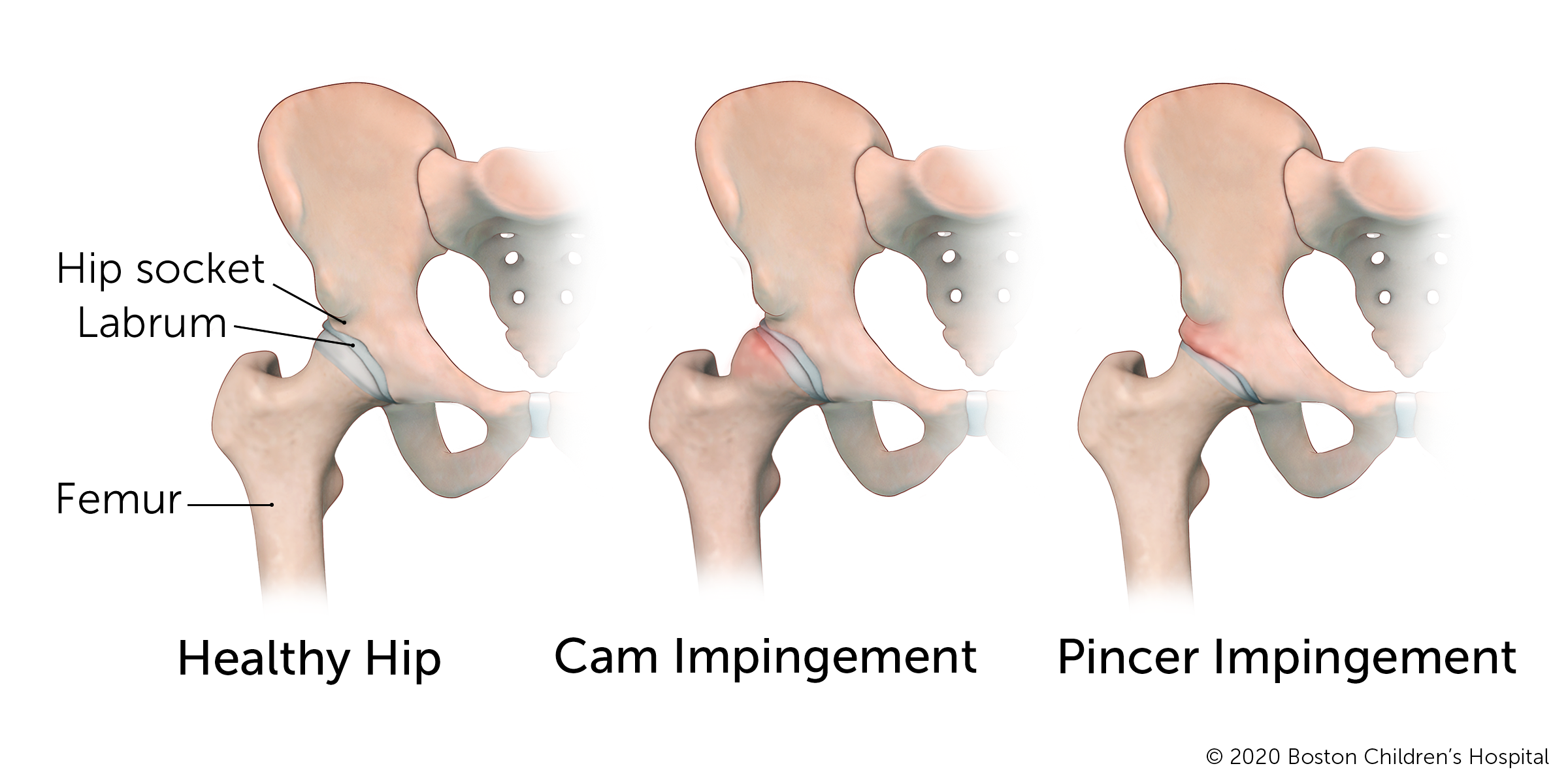
Your child’s treatment for hip impingement depends on several factors:
- Type of impingement
- Extent and severity of damage
- Your child’s age
- Overall health
- Medical history
Less severe cases of hip impingement may be treated without surgery. If your child’s hip impingement is severe, the doctor will likely suggest surgery.
Non-surgical treatment options
For many children, the first step is to rest the hip by taking a break from sports and other activities that cause hip pain. Rest is often combined with over-the-counter pain medicine such as ibuprofen to reduce inflammation.
Physical therapy (PT) might also be a part of your child’s treatment. PT helps build strength in the muscles around the hip.
If your child is still in pain after rest, ibuprofen, and PT, their doctor may suggest a shot. The shot is given inside the joint and contains a numbing medicine combined with a steroid. If the pain still doesn't go away, the doctor will discuss surgery.
Hip impingement surgery
The most common type of surgery for hip impingement is arthroscopic, a type of minimally invasive surgery.
The doctor makes two or three small incisions, then inserts a thin scope to see the joint and repair the hip. The repair may include fixing the labrum or cleaning up torn cartilage. The surgeon may also reduce friction between the head of the thigh bone and the socket by removing some bone.
Some patients go home the same day as the surgery. Others spend a night in the hospital.
If the hip can’t be repaired with minimally invasive surgery, your doctor may recommend an open surgery. This procedure requires a larger cut to expose the area that needs to be repaired.
For the first two to three weeks after surgery, your child will need to walk with crutches. They may also need PT to help restore muscle strength and range of motion. Most children can return to full activity, including sports, within three to four months.