Popular Search Terms
About the Neuroimmunology Center
Autoimmune disorders are diseases in which the body’s immune system attacks healthy tissue. These disorders can affect many different parts of the body. In our Neuroimmunology Center at Boston Children’s Hospital, we care for children and adolescents who have autoimmune disorders that affect their central nervous system (the brain and spinal cord).
These diseases are referred to as neuroimmune conditions. They include “demyelinating” disorders such as multiple sclerosis — in which the immune system damages the protective covering of nerves. Some neuroimmune conditions can also affect the lining of the brain (autoimmune meningitis), the brain itself (such as autoimmune encephalitis, autoimmune epilepsies), the nerves to the eyes (optic neuritis), and other nerves to the head and face, and the spinal cord (myelitis).
Some autoimmune conditions that affect the body generally, such as lupus, can also affect the nervous system. We care for patients with these conditions, as well. Sometimes the immune system may attack the body after becoming activated during an infection. In this case, the immune system is no longer fighting the infection, but, instead, turns against otherwise healthy body tissues and attacks them.
Certain infections themselves can also directly affect the nervous system (in infectious meningitis, encephalitis, and myelitis, for example). Our Neuroimmunology Center also cares for children with these various neurological infections. We have physicians who have additional specialization and expertise in conditions such as acute flaccid myelitis and arboviral encephalitis (West Nile virus, Eastern equine encephalitis, Powassan virus encephalitis, etc.).
Experts in pediatric neuroimmune conditions
Boston Children’s Neuroimmunology Center was founded in 2008 by Mark Gorman, MD — one of the first pediatric neurologists in the U.S. with formal fellowship training in pediatric neurology and neuroimmunology. With four additional fellowship-trained pediatric neuroimmunologists now on staff, we are one of the largest centers of its kind in the nation.
Each of these physicians sub-specializes in a different type of neuroimmune condition, giving us an unparalleled breadth and depth of pediatric-focused expertise when caring for children with these disorders. This experience allows us to diagnose both common and rare neuroimmune conditions with precision. We’re also skilled in prescribing and overseeing the use of immunotherapies, so your child can receive safe, targeted treatment directly from our experts.
Our team approach to neuroimmune disorders
Many of these disorders involve not only the nervous system but other parts of the body as well. Depending on your child’s individual case, we work with other Boston Children’s specialists who have expertise in caring for children with these conditions. These include experts in rheumatology, immunology, infectious diseases, ophthalmology, rehabilitation medicine, psychology, pulmonology, urology, endocrinology, and oncology.
Because neuroimmune conditions can affect many aspects of a child’s life and their family’s life, we take a multidisciplinary approach to care. Your child’s care team includes services from many different specialties, including educational support, social work, neuropsychology, physical therapy, occupational therapy, speech therapy, and nutrition. Together, we will create a treatment plan that puts your family in the center. Our goal is to get your child back to optimal function and health as soon as possible.
Care that’s informed by our research
The physicians in our Neuroimmunology Center are leaders in the study of neuroimmune conditions in children, teens, and young adults. Through our research, our goals are to make precision diagnosis and precision treatment possible for our patients with common and rare neuroimmune disorders, improving their prognosis.
Examples of our research that leads to improved diagnosis:
- Description of a unique central nervous system (CNS)-only presentation of hemophagocytic lymphohistiocytosis (HLH)
- Identification of mimics of CNS vasculitis, such as MOGAD and HLH, helping us avoid the need for invasive brain biopsies
- First discovery of an autoantibody biomarker for ROHHAD syndrome
- Participation in international consensus projects to establish diagnostic criteria for pediatric autoimmune encephalitis and FIRES
Examples of our research that leads to improved treatment:
- Demonstrating improved outcomes in pediatric-onset multiple sclerosis with the use of newer oral and infusion medications over older injectable medications
- Showing benefit of early rituximab use in several pediatric autoimmune brain disorders including opsoclonus myoclonus ataxia syndrome (OMAS) and anti-NMDA receptor encephalitis
- Use of novel treatments such as anakinra and tocilizumab for difficult-to-treat autoimmune epilepsy disorders such as FIRES
- Participation in international consensus projects to establish treatment recommendations for OMAS, anti-NMDA receptor encephalitis, and FIRES
Our team continues to make new life-changing discoveries through our ongoing research, including assessing the role of early treatment with intravenous immunoglobulin in MOGAD, developing and leading an international registry for OMAS, searching for a diagnostic biomarker in OMAS, and developing international treatment guidelines for Rasmussen encephalitis.
In addition, we are a site in clinical trials for pediatric-onset MS.

July 30, 2025
Study highlights the severity of acute necrotizing encephalopathy in kids with the flu
For most children, influenza (flu) usually means unpleasant symptoms like a fever, sore throat, and achy muscles. But for a small subset of kids, the flu can trigger a rare but serious complication…
July 23, 2025
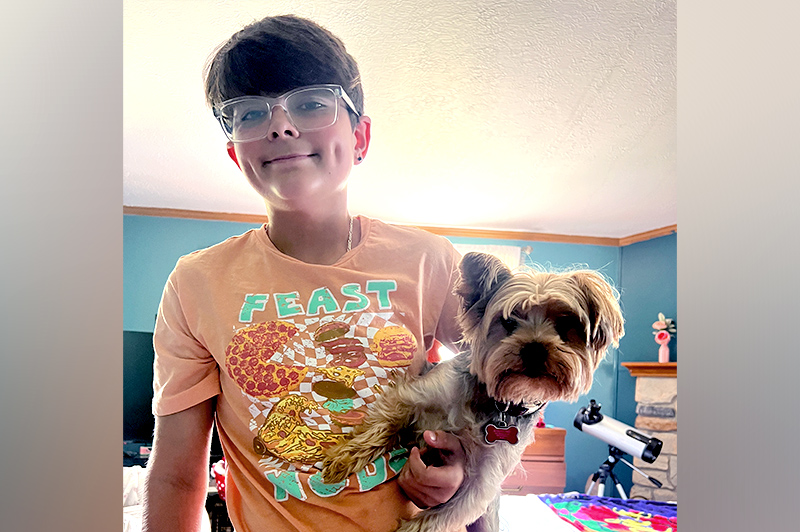
A world of difference: Why Noah traveled from Florida for multiple sclerosis care
When Noah started having headaches four years ago, his mom, Jonda, initially wondered if it was a classic kid ruse. “I thought maybe he was trying to get out of doing chores,” she remembers. But when…
May 29, 2025
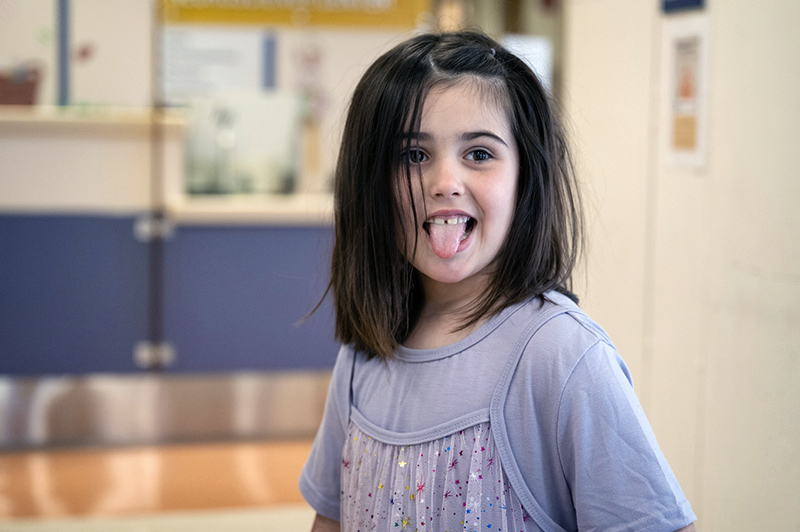
“Princess June” reigns supreme over Rasmussen syndrome
What do you call a “girly” 5-year-old who adores dolls and frilly nightgowns? If you’re one of June Pelletier’s nurses at Boston Children’s Hospital, the answer is “Princess June,” of course. …