Popular Search Terms


For more than 20 years, fetoscopic laser surgery has been the standard treatment for twin-twin transfusion syndrome (TTTS), but challenges remain around determining the best time to operate, performing the surgery accurately, and reducing long-term risks for both twins. In response, Ellen Grant, MD, director of research at the Fetal Care and Surgery Center, is leading an effort to improve how TTTS is diagnosed and treated. Through the “Developing Novel MR Tools to Optimize Surgical Planning and Fetal Outcome in TTTS” research initiative, Grant and team aim to give clinicians a clearer picture of each twin’s health, help plan safer surgeries, and support better outcomes for each twin.
What is involved?
The project has three components aimed at helping clinicians make more informed decisions before, during, and after TTTS intervention:
- Rapid 3D visualization for surgical planning
- Assessment of placental blood flow and oxygen delivery
- Automated fetal growth and movement tracking
Rapid 3D visualization for surgical planning
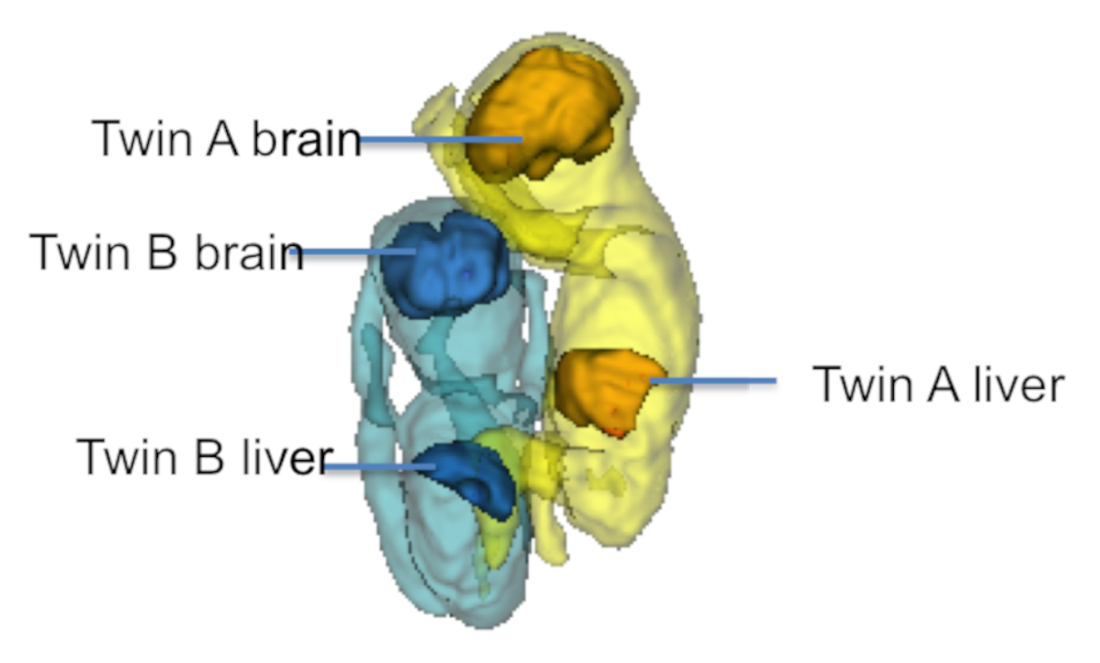
The team uses an MRI technique called HASTE to take images from different angles. Advanced software then automatically combines these into:
- High-resolution 3D images of the uterus and surrounding structures
- Flattened surface maps of the placenta for easier viewing
- Detailed views of blood vessels and where the umbilical cord attaches
These images will be available within 15 minutes, allowing clinicians to quickly map the surgical area before accessing the uterus.
Assessing blood flow and oxygen delivery
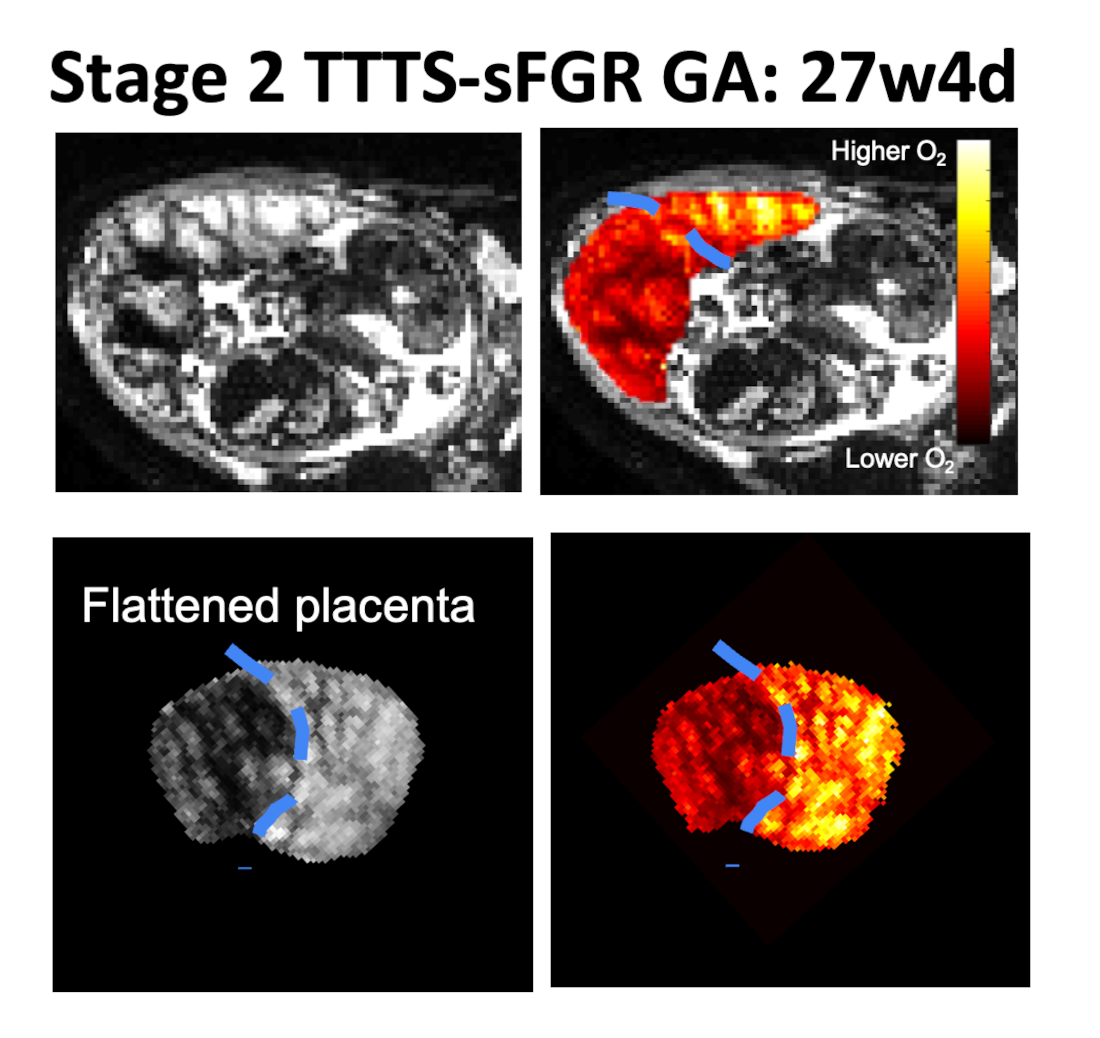
Using IVIM MRI and dynamic T2* mapping during maternal oxygen support, the team measures blood flow and oxygen transfer within the placenta. These scans produce detailed profiles of each twin’s placental support — including blood flow, oxygen levels, and nutrient delivery — at baseline, immediately post procedure, and at a four-week follow-up. Comparing these points enables clinicians to assess how each twin responds to treatment and how differences in placental function may be affecting each twin’s health. This insight could allow for earlier and more targeted care.
Automated tracking of fetal growth and movement
Because ultrasound results may vary depending on how the scan is performed and how clearly the images capture the fetal anatomy, Grant and her team are developing an advanced computer program that automatically measures head size, bladder and body volume, limb length, and joint movement. These measurements are taken before and after surgery to help clinicians better track each twin’s growth and movement, providing a reliable way to monitor their recovery and development.
What is the goal of this research?
This project improves health outcomes for twins affected by TTTS before and after birth by enabling more personalized and precise treatment. It provides a foundation for better care planning, deeper understanding of how the placenta supports each twin, and more accurate tracking of growth and movement.
How can I learn more?
To learn more about the Developing Novel MR Tools to Optimize Surgical Planning and Fetal Outcome in TTTS research initiative, please contact the Fetal Care and Surgery Center: FCSCreferrals@childrens.harvard.edu.