Popular Search Terms


What is pilonidal disease?
Pilonidal disease is a chronic infection of the skin in the area between the buttocks. Pilonidal (pronounced pie-luh-NIE-dul) occurs when hair follicles become plugged. It is a common condition that can happen to anyone but is most prevalent among teenagers and young adults. Boys are more likely than girls to have pilonidal disease.
A child who has had pilonidal disease has a 50 percent chance of having it again in the future. Taking steps to keep the area clean and dry and avoiding long periods of sitting can help prevent a reoccurrence.
Symptoms & Causes
What are the symptoms of pilonidal disease?
The first symptom of pilonidal disease is typically pain, especially when sitting. The degree of pain varies from person to person. Some people may experience a small degree of a pain when sitting, while others will be in severe pain.
Pilonidal disease often appears as a lump or swollen area that hurts when pressed with a finger. Pus or blood may or may not be draining from the lump. In some cases, a child may have a lump with some drainage and no pain. If the area becomes infected, the pus will be foul smelling and the area around it may become red and tender.
Seek medical attention right away if symptoms include nausea, fever, and exhaustion.
What causes pilonidal disease?
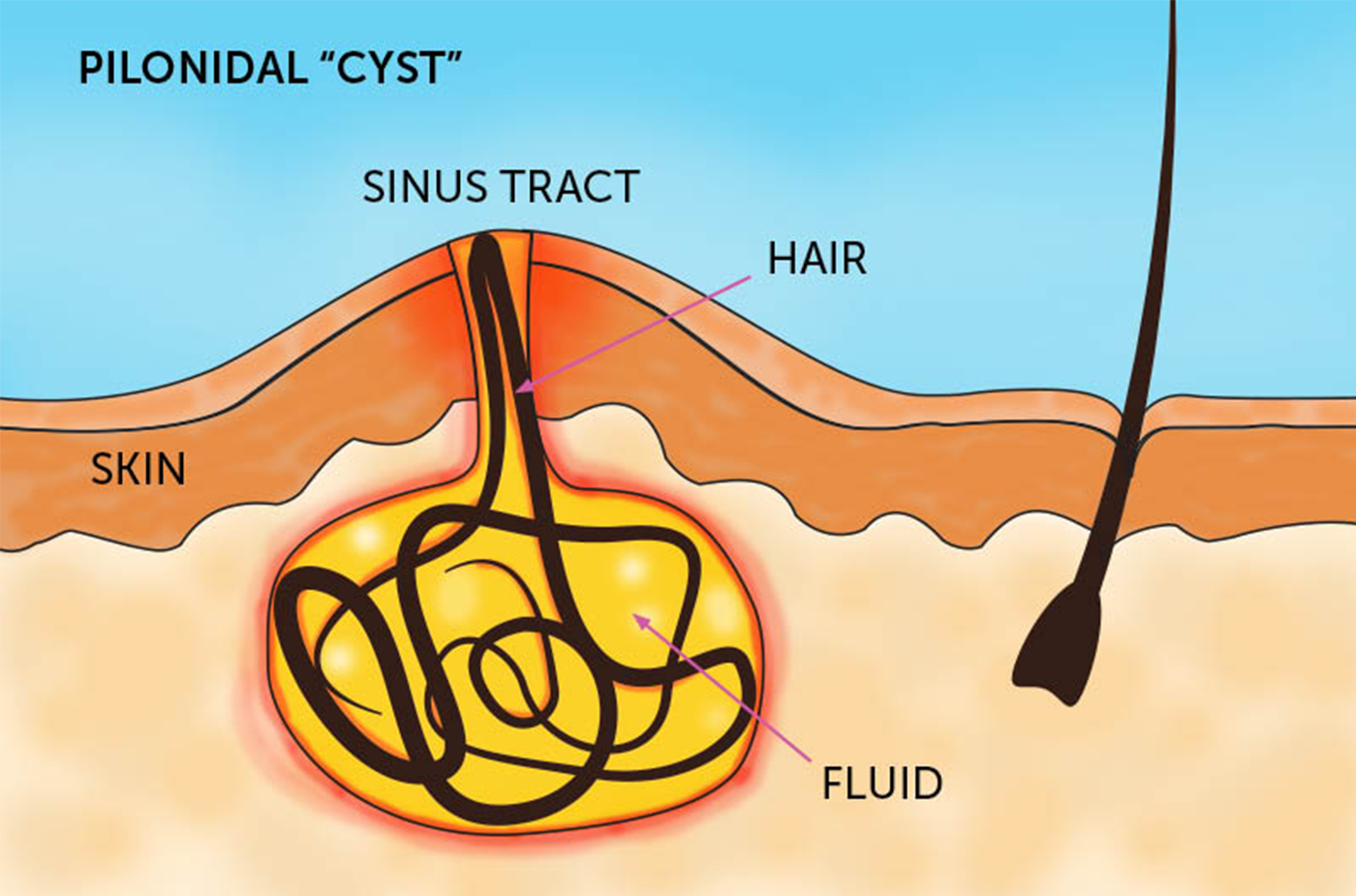
Pilonidal disease is caused by plugged hair follicles in the crease between the buttocks. Any type of hair can cause problems, but the most troublesome is coarse, thick hair. The plugged follicles may rupture into the deeper skin, creating an indentation, or pit, in the skin. If irritation under the skin continues, a pilonidal sinus, or tract, may form. This allows hair and other debris to travel under the skin and form a nest (a nidus), usually above the pit. This collection of hair and debris can get infected and an abscess may form. In severe pilonidals it is not unusual to have more than one abscess.
Factors that increase the risk of the follicles becoming plugged and rupturing include:
- Family history of pilonidal disease
- Sitting for a long time
- Activities such as horseback riding or bicycling that put extended pressure on the area
- Thick or coarse body hair
- Tight clothing
- Excess weight
- Tendency to sweat heavily
Diagnosis & Treatments
How is pilonidal disease diagnosed?
Pilonidal disease is diagnosed based on symptoms such as swelling and pain in the tailbone region. Carefully examining the buttocks crease may reveal holes in the skin.
How is pilonidal disease treated?
There are a few different treatment options for children with pilonidal disease, depending on the severity. Sometimes when a pilonidal abscess first appears, doctors treat it with antibiotics and suggest home hygiene, including shaving and regularly cleaning the infected area. If there is an infected pocket present, it may need to be drained. This can resolve the infection when combined with antibiotics.
Hair removal
Hair removal is the most important thing you can do to treat pilonidal disease. Even one hair can keep the cut from healing or can cause a new abscess to appear. A family member or clinician will most likely need to help with home hair removal.
Hair removal methods
Shaving
The area between the buttocks may need to be shaved every week, depending on how thick the hair is and how fast it grows. You can use a regular razor, electric beard trimmer, or eyebrow shaper.
Chemical hair removal
Hair-removal cream or gel removes hair and keeps it from growing back for longer. Make sure to keep the cream away from any broken skin and the anus.
Laser hair removal
Some people have an excessive amount of hair that cannot be managed by shaving alone. In such cases, the medical team may recommend laser hair removal.
Laser hair removal is a safe procedure that can be performed in a physician’s office. This treatment can cause mild discomfort but is usually well tolerated. The entire treatment takes about two to three minutes.
Permanent or near-permanent hair removal requires between four and eight laser treatments. Treatments are six to eight weeks apart. Waiting too long between treatments will cause your child to need extra laser treatments, so it is important to schedule timely laser treatments.
Hygiene
Your doctor may recommend regularly cleaning the area to remove all bacteria, debris, loose hairs, and sweat on the skin of the buttock crease. You can do this by:
- Soaking in a bath tub, Jacuzzi, pool, or ocean for 10 to 15 minutes, two to three times a day
- Spraying the buttock area with a hand-held shower head for 10 to 15 minutes, two to three times a day
If the pilonidal abscess is not draining on its own, it may need to be drained in a doctor’s office or emergency room.
Sinusectomy
Sinusectomy removes the skin pits and closes the entry route for hair. This well-tolerated procedure is performed in your doctor’s the office with local anesthesia. At Boston Children’s, we have performed more than 200 of these procedures.
Surgical treatments
Surgical treatment of pilonidal disease was common in the past but is now rarely performed. We use it only for patients who fail sinusectomy or are unable to comply with the treatment protocol for behavioral or other reasons.
How we care for pilonidal disease
Our Pilonidal Care Program treats children and teenagers with pilonidal disease. As part of the Department of Surgery, we specialize in treating pilonidal disease and preventing its reoccurrence.
