Weather Alert
Consider switching to a virtual visit to receive care from home. Learn more
Consider switching to a virtual visit to receive care from home. Learn more


A fracture is a break in the bone that occurs when more force is applied to the bone than the bone can withstand. Fractures are also known as broken bones. Arm bones are fractured more often than other bones.
The signs and symptoms of a fracture include:
Seek medical care right away if your child displays any of symptoms of a fracture. If you can see the bone poking out through the skin, do not move your child and call 911 immediately.
Fractures are commonly associated with sporting accidents, falls from heights, and bike and car accidents. Poor nutrition, a diet low in calcium, and obesity can all increase a child’s fracture risk.
Children’s bones grow throughout childhood. This growth potential allows children’s bones to “remodel,” or naturally correct some or all of the deformity caused by a fracture. Because children’s bones are growing, they also break in different patterns compared to adult bones.
Bones fracture in a variety of different ways. Most fractures result from mild to moderate trauma, such as a fall or a direct blow while a child is playing or participating in sports. If there’s more force applied to the bone than the bone can absorb, it will break or buckle. The amount and type of force will affect the type of fracture.
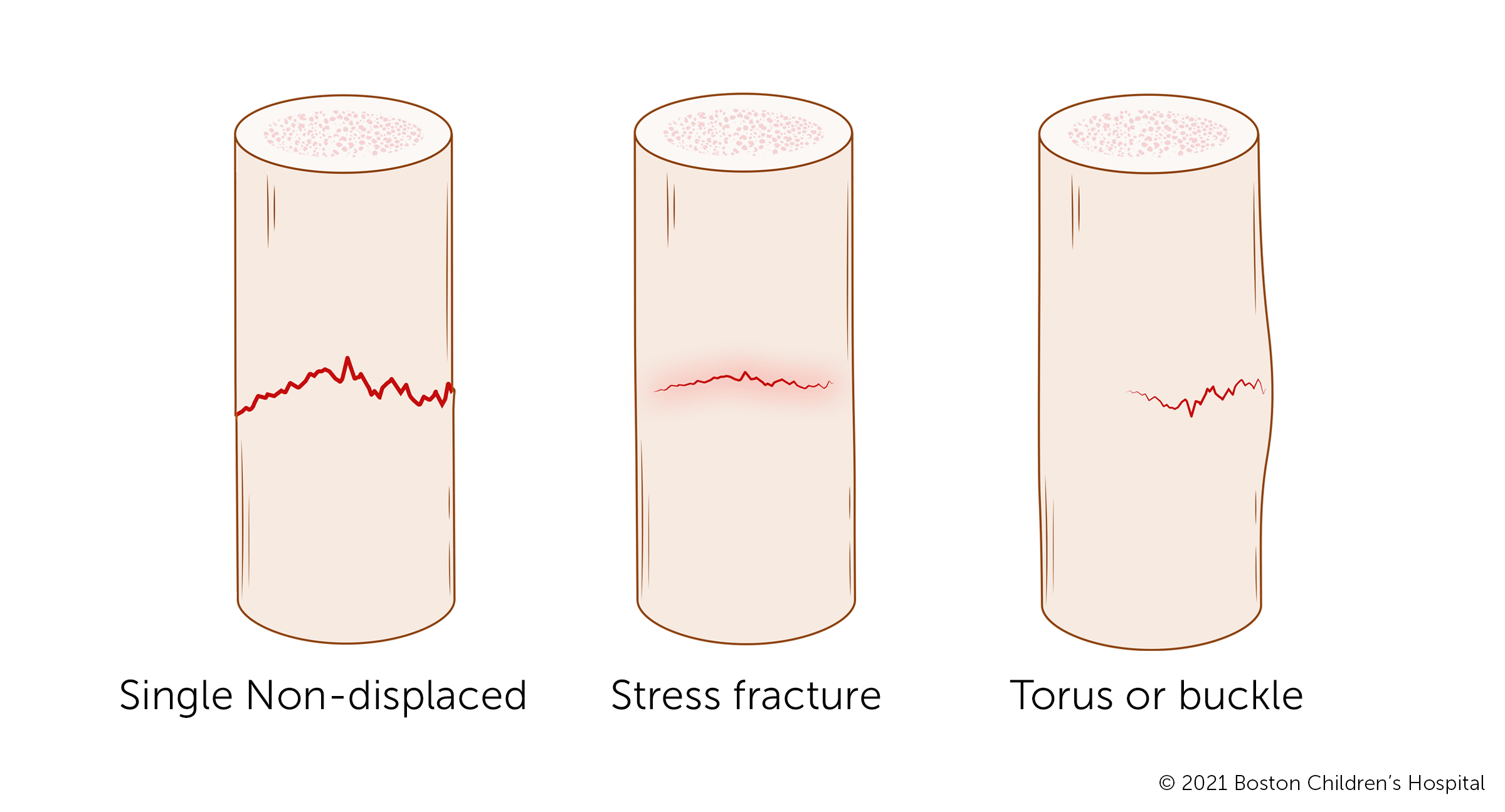
With non-displaced fractures, the bone typically stays aligned in an acceptable position for healing. Such fractures are usually treated with a splint, brace, or cast. This immobilizes the injured bone, promotes healing, and reduces pain and swelling.
The following kinds of fractures can be treated with a splint, brace, or cast:
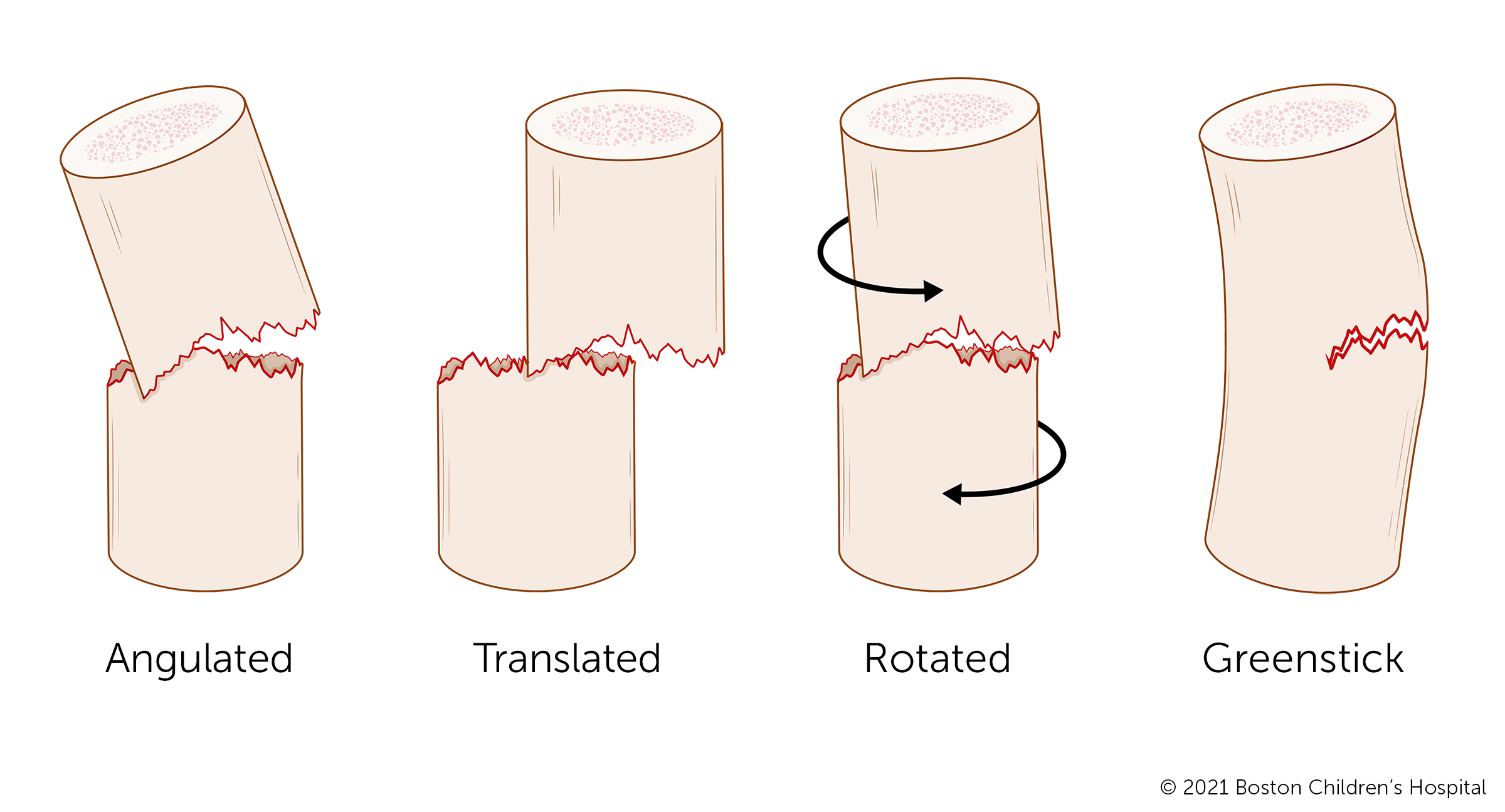
When a fracture is displaced, the ends of the bone have come out of alignment. In such cases, the broken bone needs to be set back into alignment so it will heal properly. This is called a reduction. After the reduction, the injured limb is immobilized with a brace, splint, or cast while the bone heals. If the reduction is unsuccessful, other treatment may be necessary.
Types of displaced fractures include:
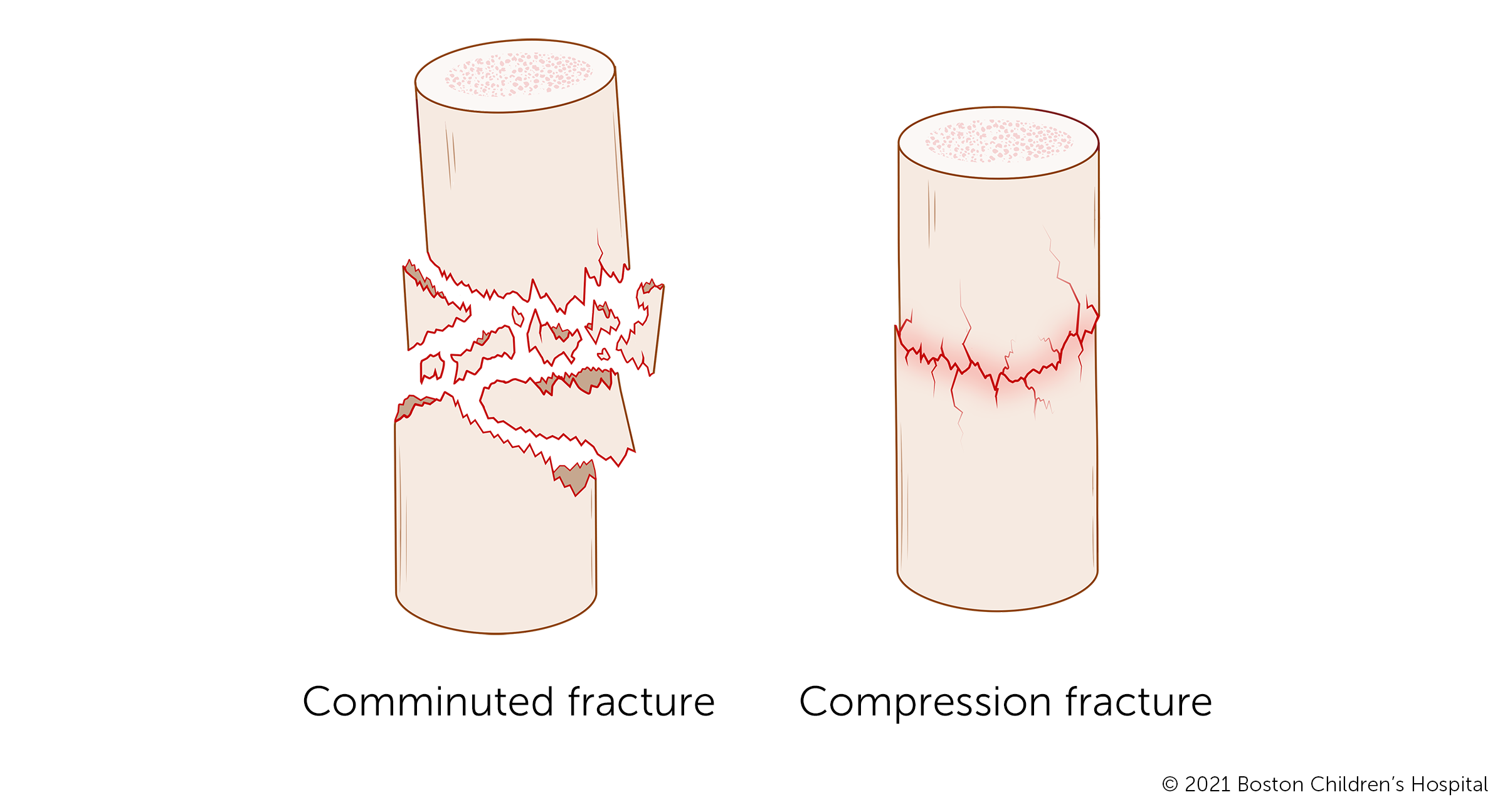
Some fractures require reduction or surgery, or the bone will not heal properly. Examples include:
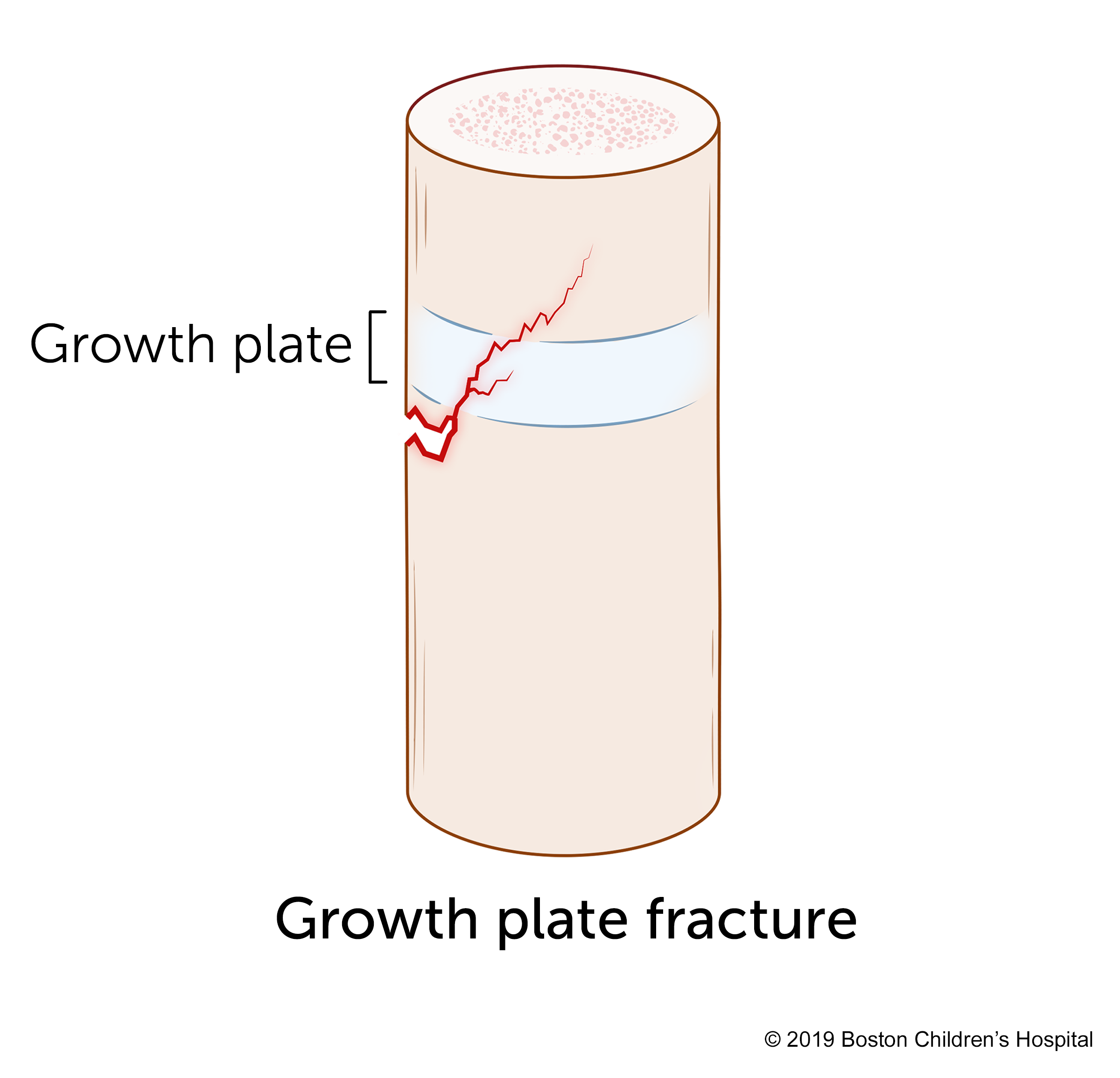
Growth plate fractures are typically caused by great force during sports or playground accidents. Depending on the seriousness of the fracture, they may be treated with a splint, cast, or walking boot. Some serious growth plate fractures require surgery.
In rare cases, growth plate fractures can slow the growth of the affected leg or arm. Damage to a growth plate can also cause the limb to grow at a wrong angle. When surgeons operate on broken limbs in children, they must protect the growth plates as much as possible.
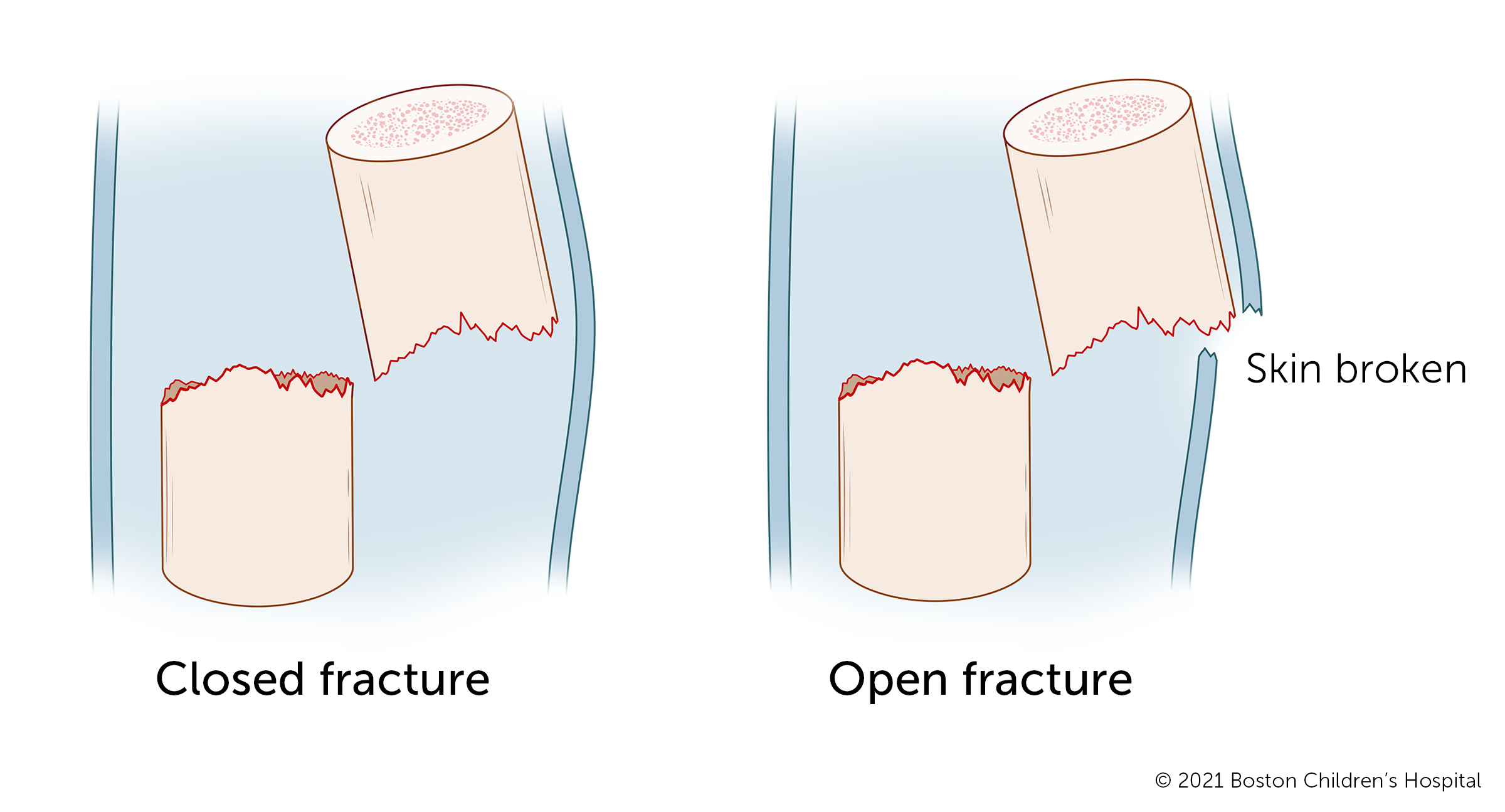
Bone fractures are classified as either open or closed. A closed fracture occurs when the bone is broken, but the skin remains intact. An open fracture, also known as a compound fracture, occurs when the broken bone breaks through the skin. Open fractures are rare. They can become infected if not treated appropriately and require immediate surgical attention.
Children's bones are more flexible and have more healing potential than adult bones. This is good news for recovery, but it also means your child should get medical attention as soon as possible to ensure the bone is in the correct position as it heals.
Your child’s doctor will closely examine the injured area for tenderness, redness, and swelling and will order diagnostic imaging tests to determine what type of treatment is appropriate. Diagnostic testing for fractures may include:
Treatment will be based on the type of fracture, its severity, and your child's age. In most cases, fractures in children are treated with a sling, splint/brace, cast, or walking boot. These immobilize the injured bone while it heals.
Doctors often put a splint on a newly broken bone if they are concerned about swelling. If the injured area swells, a cast could become too tight and reduce blood circulation. Typically, the splint will be replaced with a cast once swelling has gone down. Splints are also used for minor fractures that don’t require a cast.
A broken ankle, foot, or leg may be stabilized with an Aircast® boot. The Aircast boot immobilizes the foot and ankle but can be removed for bathing or icing under certain circumstances. Depending on the severity of the break and stage of healing, it may be OK to remove the boot for short periods for icing or bathing.
Casts are stronger than splints and provide more protection to the injured area. Casts have two layers: a soft inside layer that rests against the skin and a hard, outer layer that protects the injured bone and prevents movement while the bone heals. The type of cast used will depend on the type of fracture.
A reduction is a non-surgical procedure to set the bone so it will heal properly. The doctor realigns the broken bone from outside the body and puts the injured limb in a cast or splint. Reductions are usually performed in an emergency department with medications that manage pain and make your child sleepy or sedated so they won’t remember the procedure.
Severe or unstable fractures that can’t be set properly with a reduction require surgery. To increase the chances that the bone will heal in the correct position, your child's doctor will decide very early in treatment whether to operate. In some cases, however, if the area around the fracture is swollen, the procedure may have to wait until the swelling goes down.
The child will be sedated or under general anesthesia in the operating room and the doctor will set the bone into place. A pin may be used to hold the pieces of bone securely in place while the bone heals. If the fracture involves a joint, the surgeon will realign the joint and hold it in place with screws, a plate, or a pin.
Traction uses a gentle, steady pulling motion in a specific direction to allow the ends of the broken bone to align and heal. In some cases, traction reduces painful muscle spasms.
Medication is sometimes used to help control pain and muscle spasms. If a fracture is open, antibiotics are used to prevent infection.
Every year the Orthopedics and Sports Medicine Department at Boston Children’s Hospital treats thousands of children, adolescents, and young adults with fractures of all complexities. Thanks to our pediatric expertise, we can precisely diagnose conditions related to the growing musculoskeletal system and optimal care plans.
At our Orthopedic Urgent Care Clinics, we care for injuries that require prompt medical attention but are not serious enough to need emergency room care. We offer urgent care services in four locations: Boston, Waltham, Peabody, and Weymouth.
Our experts in orthopedic care have created a series of helpful guides that cover different types of fractures, clinical treatment, home care, and expected recovery times.
Shoulder, upper arm
Elbow
Forearm
Hand, wrist
Lower leg
Ankle, foot
