Many childhood injuries are preventable if you know the risks
Childhood injury is to blame for more fatalities than all other causes combined, and most are completely preventable.


A broken hand happens when one or more of the bones in a child’s hand breaks. Broken hands are also known as hand fractures and are one of the most common injuries in children.
Depending on which bone is broken, a hand fracture may be a:
Both metacarpal and phalangeal fractures can range from a small crack to a severe fracture:
Any broken bone, no matter how serious, should be evaluated and treated by a doctor to ensure proper healing of the bone and prevent future pain and dysfunction.
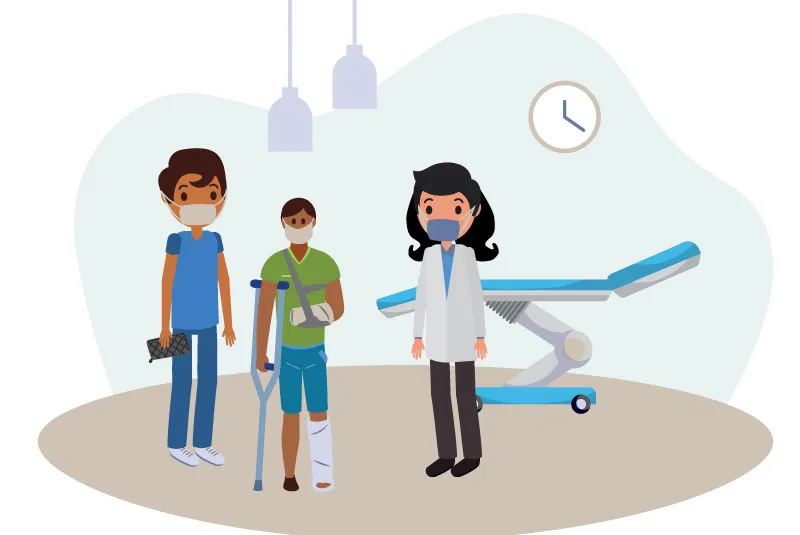
Childhood injury is to blame for more fatalities than all other causes combined, and most are completely preventable.
It can be hard to know if your child has a broken bone in their hand, so it’s important to seek prompt medical care if your child has any of these symptoms:
Hand fractures happen when the hand is placed under more force than the bones can withstand. This can happen:
A break of the fifth metacarpal, the bone on the pinkie side of the hand, it is often caused by punching a hard surface and is known as a “boxer’s fracture.”
At Boston Children’s Hospital, one of our orthopedic specialists will examine your child’s hand, including whether your child can move their hand, the position of their fingers, and if there are any signs of bruising.
We typically use X-rays to confirm whether the hand is broken as well as determine the location and severity of the break.
Almost all children with a broken hand need to wear a cast to keep their hand immobile while the bone heals. Children with hairline fractures may be able to wear a splint rather than a cast.
If your child has a displaced fracture, we will realign the pieces of the bone through a procedure called a “reduction.” This may be done in the emergency room, the orthopedic office, or the operating room depending on the type of break. Displaced fractures may require surgery using rods, pins, and other hardware to stabilize the bone while it heals.
Your child’s hand will likely be sore, particularly in the first few days or week after treatment. The following may help:
Healing from a broken hand typically takes three to four weeks, depending on the severity of the injury. Your child should avoid activities that put them at risk of falling or colliding with an object or another child until their hand has fully healed.
Some children benefit from occupational therapy to help them fully recover from a hand fracture.
We will schedule a follow-up appointment and take more X-rays three or four weeks after your child’s initial treatment. During this visit, we’ll assess how well your child’s bone is healing and recommend when your child can safely return to sports and other activities.
The Orthopedic Urgent Clinic at Boston Children’s Hospital offers access to world-class pediatric specialists, X-ray facilities, and cast technicians in Boston, Needham, Peabody, Waltham, and Weymouth. As part of the Orthopedics and Sports Medicine Department, we provide specialized orthopedic care for children, teens, and young adults with fractures and other injuries that need prompt care.
If your child has a displaced hand fracture, we may refer them to our Hand and Orthopedic Upper Extremity Program. As one of the largest programs of its kind in the country, our orthopedic surgeons specialize in repairing complex hand, wrist, and upper extremity injuries in growing children, teens, and young adults. No matter what the condition, our goal is always the same: to help our patients regain function so they can reach their full potential.
